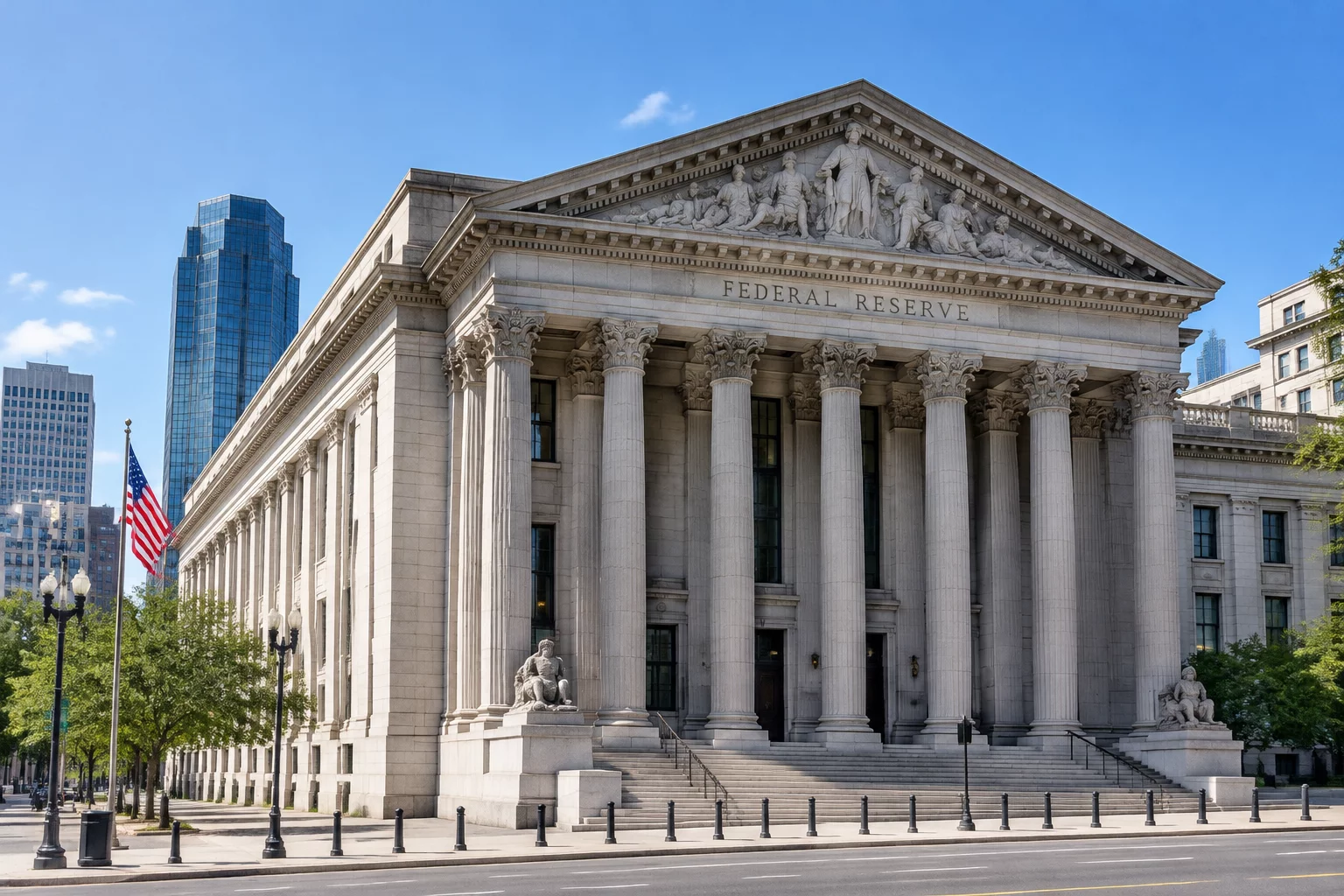
FOMC Policy Deliberations and Divided Voting
The Federal Open Market Committee concluded its two-day July 2026 meeting by keeping the target federal funds rate unchanged within the 3.75% to 4.00% corridor. While market participants broadly anticipated this pause, the formal policy statement revealed unusual internal division. Two voting regional Fed presidents cast formal dissents, advocating instead for an immediate 25-basis-point increase to curb stubborn cost pressures in the services economy.
Central bank officials underscored their commitment to restoring price stability toward the long-term 2.0% objective. However, the committee acknowledged that macroeconomic conditions have entered an asymmetric phase where premature easing risks re-accelerating consumer inflation, while renewed tightening could trigger an abrupt contraction across interest-sensitive commercial sectors.
Core Inflation and Labor Market Dynamics
Economic indicators reviewed during the policy session demonstrated diverging trends between commodity pricing and underlying services inflation. The committee noted that headline price growth continues to moderate in energy and manufacturing inputs, but domestic shelter and labor-intensive services maintain upward pressure on aggregate indices.
- Annual core Personal Consumption Expenditures (PCE) inflation held at 3.7%, exceeding the committee interim forecast.
- Monthly payroll creation demonstrated initial signs of deceleration, narrowing wage growth to a 3.4% annual pace.
- Short-term liquidity indicators across interbank credit markets remained orderly without systemic disruptions.
- Balance sheet redemption caps continued at $60 billion per month for Treasury securities and agency debt.
These conflicting forces prompted the central bank leadership to adopt a wait-and-see posture. Policymakers noted that real interest rates remain in restrictive territory, meaning cumulative prior tightening continues working through credit channels without requiring immediate incremental rate hikes.
Sector Impacts and Benchmark Metrics
Financial markets responded with moderate yield adjustments following the release of the committee statement. Fixed-income desks recorded upward pressure across short-duration sovereign debt, while commercial banking institutions maintained elevated lending standards across corporate credit lines and commercial real estate refinancing facilities.
Key Economic and Rate Indicators
Macroeconomic Outlook for Autumn 2026
Looking ahead to upcoming autumn policy sessions, institutional analysts anticipate heightened volatility surrounding high-frequency economic releases. Future decisions will depend on consecutive monthly readings in nonfarm payroll expansions and core consumer price index updates. The presence of formal dissents indicates that any unexpected acceleration in inflation figures could reopen committee discussions on policy tightening.
Conversely, should labor demand cool faster than anticipated, the consensus within the FOMC may shift toward recalibrating borrowing costs before year-end. For now, monetary leadership preserves flexibility, reiterating that policy is not on a pre-set course and will respond strictly to incoming macroeconomic data.