01. Capital Allocation and Facility Modernization
GE Appliances has formally committed a $1 billion capital development initiative focused on its flagship Appliance Park manufacturing complex in Louisville, Kentucky. The multi-year plan directs funds into physical plant retrofits, electrical infrastructure enhancements, and digital factory architecture across multiple production buildings. This initiative represents one of the largest single-site manufacturing commitments in the region over the last decade.
The dedicated funds will primarily target the transformation of existing refrigeration, laundry, and dishwasher manufacturing plants within the expansive 900-acre complex. By replacing older production hardware with connected industrial Internet of Things systems, the facility aims to increase total output capacity while cutting unit energy consumption across high-volume production cycles.
02. Automation Architecture and Factory Floor Redesign
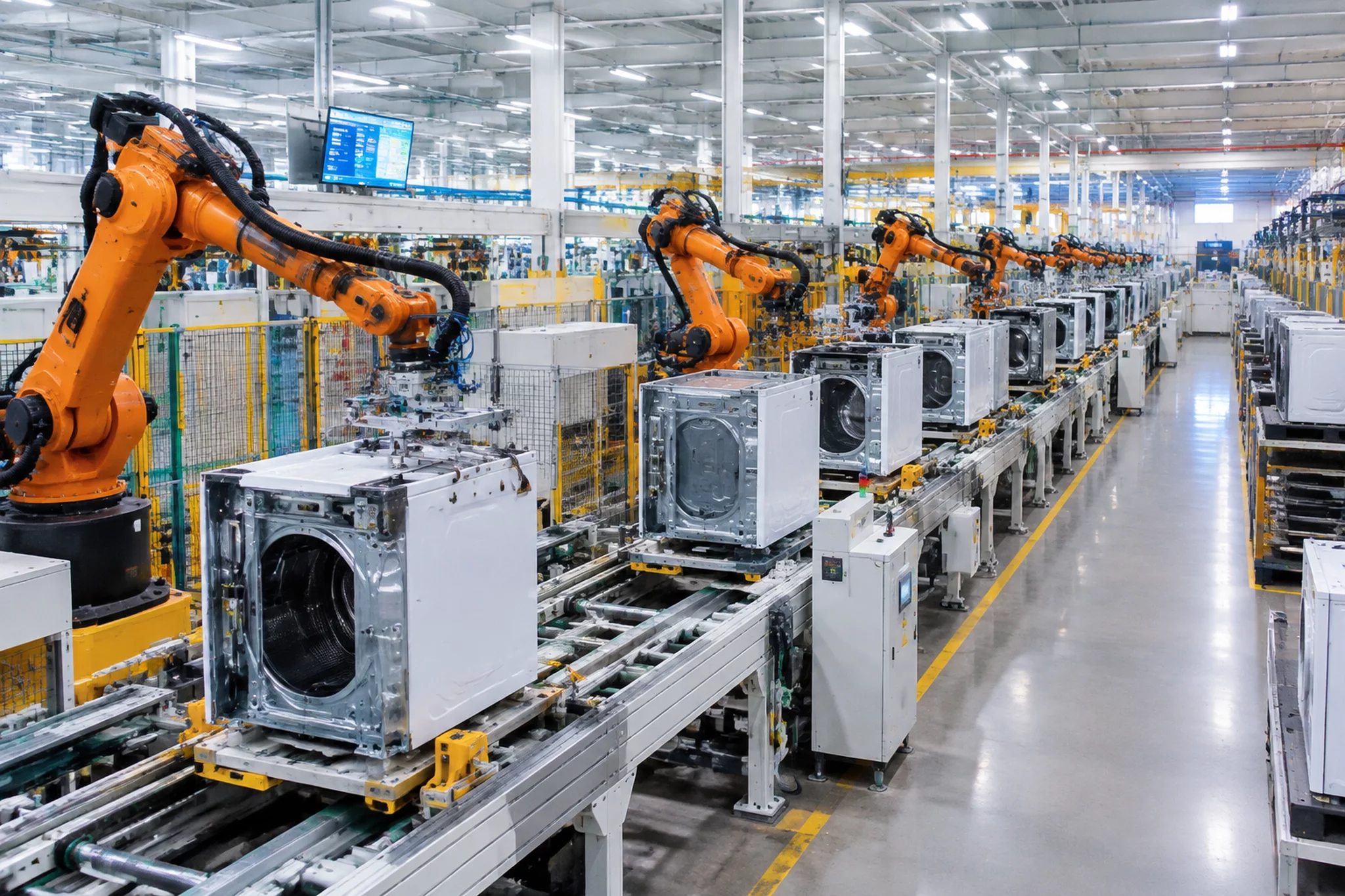
The central operational objective of the investment involves deploying high-precision robotics and automated material handling corridors. Collaborative robotic arms will manage repetitive stamping and sheet metal fabrication tasks, freeing technical personnel to supervise quality telemetry and machine calibration.
Re-architecting domestic industrial footprint through automation establishes long-term cost efficiencies and ensures consistent build tolerance across complex consumer durable categories.
— Jessica Lee, Senior Industrial Analyst
Integrated automated guided vehicles will transport subassemblies between stamping presses, coating lines, and final assembly bays. This unified material flow eliminates transit bottlenecks within the facility, allowing production managers to rebalance assembly lines dynamically based on shifts in consumer demand patterns.
03. Supply Chain Resilience and Regional Economic Spillover
Beyond immediate factory floor upgrades, the capital influx strengthens regional supplier networks throughout Kentucky and neighboring Midwest states. Upstream component fabricators, steel suppliers, and specialized logistics providers will see heightened demand as localized assembly operations scale up to meet targeted operational volume.
Operational Milestones and Objectives
- Modular line configuration reducing switchover times between different appliance product models.
- Automated optical inspection systems providing continuous real-time defect identification.
- Closed-loop material recycling processes that minimize sheet metal and polymer production scrap.
This localized manufacturing footprint also insulates downstream inventory levels from global maritime freight disruptions. By sourcing core metal stampings, harness assemblies, and plastic moldings within shorter geographic radii, production cycles become significantly less vulnerable to international logistics bottlenecks.
04. Competitive Positioning in the North American Appliance Market
The appliance industry has seen rapid consolidation around energy-efficient and connected home products. Modernized production pods within Appliance Park will allow GE Appliances to accelerate product development cycles for premium refrigeration and induction cooking appliances, defending its competitive share against foreign and domestic competitors.
Overall, this capital commitment reflects a broader trend among major industrial enterprises toward modernizing mature domestic facilities rather than constructing greenfield sites overseas. The combination of precision robotics, localized supply contracts, and digitized quality management establishes a sustainable framework for domestic manufacturing competitiveness over the next decade.